
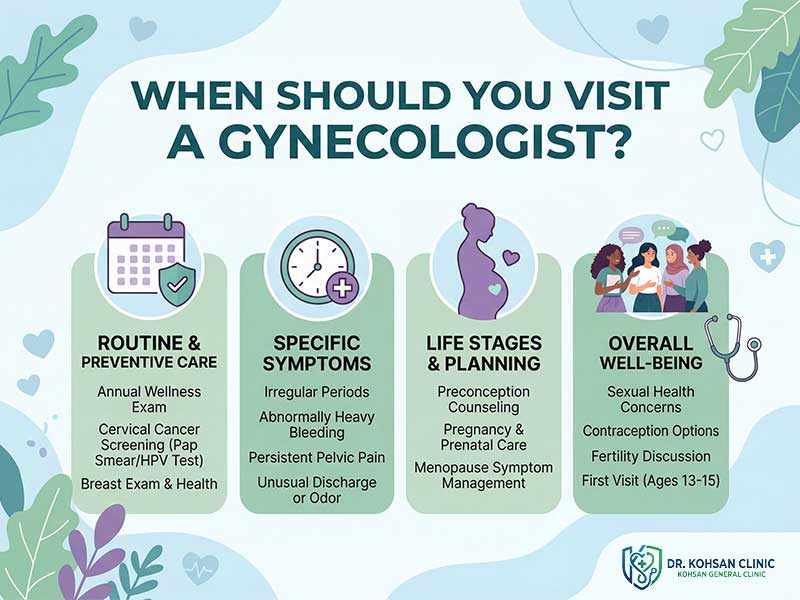
When Should You Visit a Gynecologist ? Many women postpone visiting a gynecologist until they experience serious symptoms or discomfort. However, gynecological care should not only begin when a problem appears. Regular gynecological check-ups are an essential part of preventive healthcare for women and help detect medical conditions early.
At Obstetrics & Gynecology Services at Kohsan Polyclinic in Port Saeed, Dubai, women receive professional medical care for reproductive health, pregnancy care, hormonal issues, and preventive screenings. Understanding when to visit a gynecologist helps women maintain long-term health and prevent complications.
This guide explains when you should see a gynecologist, the symptoms that require medical attention, and why regular visits are important for women’s health.
What Does a Gynecologist Do?
A gynecologist is a doctor who specializes in the female reproductive system. This includes the uterus, ovaries, fallopian tubes, cervix, and vagina. Gynecologists diagnose and treat conditions that affect women’s reproductive health and provide preventive care such as screenings and routine examinations.
Gynecologists commonly help patients with:
- Menstrual disorders
- Pregnancy care
- Hormonal imbalance
- Pelvic pain
- Fertility issues
- Menopause management
- Preventive screening tests
They also provide guidance regarding contraception, reproductive health, and long-term wellness for women of all ages.
When Should a Woman First Visit a Gynecologist?
Many medical organizations recommend that women begin visiting a gynecologist between the ages of 13 and 15 or when they become sexually active. The first visit may simply involve discussing reproductive health, menstrual cycles, and any concerns the patient may have.
Early consultations help young women understand their bodies and receive accurate medical advice about reproductive health.
Annual Gynecological Check-Ups
Even if a woman feels healthy, regular gynecological check-ups are recommended. Most doctors advise visiting a gynecologist once a year for a routine examination.
Annual visits allow doctors to monitor reproductive health and identify early signs of medical conditions such as infections, hormonal disorders, or cervical abnormalities.
Routine gynecological check-ups may include:
- Pelvic examination
- Cervical screening (Pap smear)
- Breast examination
- Hormonal health evaluation
- Discussion of menstrual health
Irregular or Painful Menstrual Cycles
Menstrual cycles can vary between individuals, but significant changes or severe symptoms should be evaluated by a gynecologist.
You should consider visiting a gynecologist if you experience:
- Very heavy menstrual bleeding
- Severe menstrual pain
- Periods lasting longer than usual
- Irregular cycles
- Missed periods
These symptoms may indicate hormonal imbalances, polycystic ovary syndrome (PCOS), uterine conditions, or other reproductive health concerns.
Unusual Vaginal Symptoms
Changes in vaginal health should not be ignored. Many gynecological conditions present symptoms that may initially appear mild but require medical evaluation.
Women should visit a gynecologist if they experience:
- Unusual vaginal discharge
- Persistent itching or irritation
- Strong vaginal odor
- Pain during intercourse
- Burning sensation during urination
These symptoms may indicate infections or other conditions that require treatment.
Pelvic or Lower Abdominal Pain
Persistent pelvic pain should always be evaluated by a medical professional. Pain in the lower abdomen or pelvic area can sometimes indicate reproductive health problems.
Possible causes include:
- Ovarian cysts
- Endometriosis
- Pelvic inflammatory disease
- Fibroids
- Hormonal disorders
A gynecologist can determine the cause through examination and diagnostic tests.
Pregnancy and Prenatal Care
One of the most common reasons women visit gynecologists is pregnancy care. Prenatal visits help monitor the health of both the mother and the developing baby.
Regular prenatal care includes:
- Monitoring fetal development
- Blood tests and screenings
- Nutritional guidance
- Monitoring maternal health
- Ultrasound examinations
Women planning pregnancy or suspecting pregnancy should consult a gynecologist as early as possible.
Fertility Concerns
Couples trying to conceive may consult a gynecologist if pregnancy does not occur after several months of trying. Fertility issues can result from hormonal imbalance, ovulation problems, or other reproductive health conditions.
A gynecologist may perform diagnostic testing and recommend treatments that improve the chances of conception.
Menopause and Hormonal Changes
Women approaching menopause may experience symptoms caused by hormonal changes. These may include hot flashes, sleep disturbances, mood changes, and irregular menstrual cycles.
A gynecologist can help manage these symptoms through medical guidance, hormone therapy if necessary, and lifestyle recommendations.
Preventive Screening for Women’s Health
Preventive screening plays an important role in women’s health. Many serious conditions such as cervical cancer develop slowly and may not cause symptoms in early stages.
Regular gynecological screening helps detect problems early.
Common preventive tests include:
- Pap smear
- HPV testing
- Pelvic examination
- Hormonal evaluation
These screenings help detect potential health concerns before they become serious.
When to Seek Immediate Medical Attention
Some gynecological symptoms require urgent medical evaluation.
You should seek medical care immediately if you experience:
- Severe pelvic pain
- Heavy vaginal bleeding
- Sudden abdominal pain during pregnancy
- Fever with pelvic pain
- Unusual bleeding between periods
These symptoms may indicate serious conditions that require immediate attention.
Gynecologist Near Me in Port Saeed Dubai
When searching online for a gynecologist near you, choosing a trusted medical clinic is essential. A clinic with experienced doctors and modern diagnostic facilities ensures patients receive accurate diagnosis and professional care.
Kohsan Polyclinic is located in Al Fardan Building, Port Saeed, Dubai, providing accessible healthcare services for residents of Deira and surrounding communities.
The clinic offers comprehensive women’s healthcare including gynecology consultations, pregnancy care, and preventive screenings.
Maintaining Women’s Health Between Visits
While regular gynecological visits are important, daily habits also play a significant role in maintaining reproductive health.
Doctors recommend:
- Maintaining a healthy diet
- Regular physical activity
- Managing stress
- Practicing proper hygiene
- Attending routine health screenings
Healthy lifestyle choices can significantly improve long-term reproductive health.
Related Articles
- When Should You See a General Doctor?
- Common Childhood Illnesses Every Parent Should Know
- What Does a Blood Test Show?
Medical Sources
- American College of Obstetricians and Gynecologists
- World Health Organization
- Mayo Clinic
- Centers for Disease Control and Prevention
Regular gynecological care is an essential part of maintaining women’s health. By visiting a gynecologist regularly and seeking medical advice when symptoms appear, women can detect health problems early and protect their long-term wellbeing.
